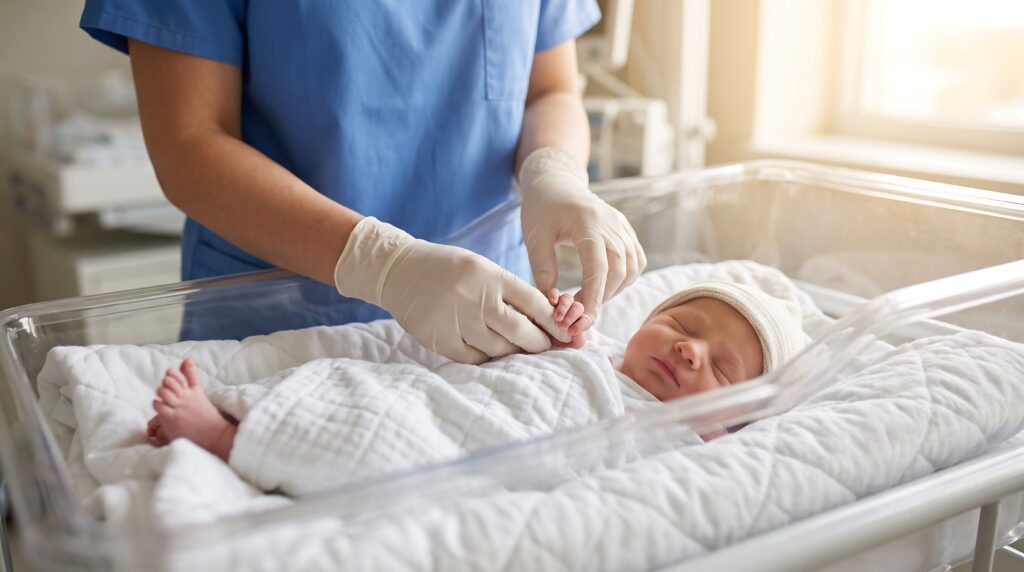
If your child had meningitis infection soon after their birth which has left them with brain injury disability, a neonatal meningitis claim could provide compensation to meet their life-long needs arising from their disability, such specialist therapies and equipment, a suitably adapted home, educational support and help with care.
Midwives, doctors and other clinicians who care for the expectant mother and newborn baby must identify and closely monitor babies who are at increased risk of infection, and respond quickly to signs of maternal or neonatal infection when they occur.
Mistakes and delays in treating maternal and neonatal infection can quickly lead to meningitis, with life-changing consequences for the baby, such as cerebral palsy disability from neonatal meningitis brain injury.
What is meningitis?
Meningitis is the medical term for inflammation of the meninges. The meninges are the layers of membranes which surround the brain and spinal cord and protect them from infection.
Meningitis occurs when the bacterial cause of the infection overwhelms the new baby’s undeveloped immune system, spreading via the bloodstream into the meninges and the cerebrospinal fluid. As the meninges become inflamed, they swell, increasing the pressure within the brain and causing damage to the brain and nerves.
What is neonatal meningitis?
Neonatal meningitis refers to meningitis which occurs during the first 28 days of a baby’s life.
Newborn babies (neonates) are highly vulnerable to infection in the first few weeks after birth, before their immune systems have developed fully. When a newborn baby shows signs of infection, they must be treated quickly in hospital with antibiotics to stop the infection before it develops rapidly into meningitis.
Neonatal meningitis can be early-onset or late-onset. Early-onset meningitis occurs within the baby’s first 72 hours of life. Late-onset meningitis infection usually develops after the baby’s first week of life but before their 28th day of life.
Meningitis infection can also affect older babies, children and adults.
What causes neonatal meningitis?
Meningitis can be caused by various forms of bacteria, viruses or fungi, but in newborn babies neonatal meningitis is most commonly caused by group B streptococcus (group B strep or GBS) or E.coli bacterial infection.
Early-onset neonatal meningitis is usually caused by an infection that is passed from mother to baby during pregnancy, labour or birth. Pregnant mothers who have GBS infection, and their newborn babies, must be monitored carefully and treated urgently with antibiotics in hospital if they have symptoms or signs of infection.
Late-onset neonatal meningitis is caused by the baby being exposed to infection in some other way, such as infected wounds, exposure to pathogens in the external environment from other people or invasive medical treatment using IV lines or catheters.
As newborn babies’ immune systems are not able to fight off infection, any untreated infection can very rapidly deteriorate into life-threatening meningitis, leading to permanent brain injury and neurological disability.
What are the signs and symptoms of neonatal meningitis?
Early symptoms and signs of neonatal meningitis are often non-specific and can be mistaken for mild illness.
‘Classic’ signs of meningitis, such as fever or a rash which does not fade under pressure, may not be present in the early stages and many signs may not be present at all.
Signs of neonatal meningitis include any one or more of the following, appearing in any order:
- high temperature (fever) with cold hands and feet;
- reluctance to feed;
- vomiting and/or diarrhoea;
- floppy, unresponsive or difficult to wake;
- irritable or dislikes being handled;
- abnormally fast or slow breathing rate, grunting or difficulty breathing;
- pale or blotchy skin;
- red or purple spots or a rash which does not fade under pressure;
- unusual high pitched, moaning or whimpering cry;
- bulging fontanelle (the soft spot on top of the newborn’s head);
- swollen tummy;
- arched back;
- convulsions or seizures (fits);
- not passing urine – nappies are dry.
If a baby is suspected to have an infection or to be unwell with meningitis, medical attention must be sought urgently, as any delays in investigation and antibiotic treatment can lead to life-changing injury and disability.
Can neonatal meningitis cause permanent disability?
Untreated neonatal meningitis can cause death or severe disability, such as brain injury, hearing loss, visual impairment, epilepsy, problems with speech, and learning disability.
Where the infection has also spread through the baby’s bloodstream (septicaemia) causing damage to the blood vessels and nerves, the long-term effects can also include damage to organs, scarring or loss of digits or limbs.
Untreated infection can very rapidly deteriorate into meningitis in a newborn baby, and if neonatal infection or meningitis is suspected, swift action must be taken to admit the baby to hospital and begin antibiotic treatment within one hour of diagnosis. With prompt and correct treatment, many babies make a good recovery.
Which babies are at risk of neonatal meningitis?
All newborn babies are at increased risk of infection and meningitis because their immune systems have not yet developed sufficiently for their bodies to be able to fight off infection.
In addition, the risk is greater for newborn babies with the following risk factors during their mother’s pregnancy, their birth or their first few days of life:
- their mother had diabetes;
- their mother had an infection, such as group B strep, HSV or chorioamnionitis;
- their birth followed prolonged or preterm pre-labour rupture of the membranes (PROM or PPROM);
- they were born prematurely;
- they had HIE brain injury at birth;
- they were small for dates with low birth weight;
- they suffered skin grazes or wounds from medical equipment (IV lines, catheters, forceps);
- they have metabolic, digestive or urinary tract disorders.
The baby’s risk of neonatal infection and serious complications, such as meningitis, can usually be managed with proper medical care. Where a baby suffers meningitis injury and disability as a result of their healthcare team’s negligent failure to recognise, monitor and correctly manage their increased risk of infection, they may be entitled to claim compensation.
Can neonatal meningitis be prevented?
There is currently no vaccination for the most common infective causes of neonatal meningitis (group B streptococcus (GBS), E. coli or listeria).
GBS infection can pass from mother to baby during labour and delivery, increasing the risk of early-onset neonatal infection and meningitis, so if a mother is found to have GBS infection during pregnancy, she must be advised about her condition and offered antibiotics during pregnancy (where needed to treat her infection) and in labour. Her newborn baby must also be monitored carefully for signs of infection, and be diagnosed and treated quickly with antibiotics to avoid serious complications, such as meningitis brain injury and neurological disability.
Can brain injury disability from neonatal meningitis be caused by medical negligence?
Negligent or delayed medical care of a pregnant or birthing mother and her newborn baby can result in meningitis brain injury and permanent, life-changing disability for the baby.
Common mistakes which can lead to the baby developing meningitis, or increase the severity and extent of their disability include:
- failing to identify and reduce the risk of infection to a baby whose mother has an infection;
- failing to monitor and manage risk factors for neonatal infection from PROM or PPROM during pregnancy;
- mistakes in advice, treatment and planning of labour for a pregnant mother who has GBS infection;
- failing to monitor and closely observe a baby who is at risk of infection;
- misdiagnosis and delays in diagnosis;
- failing to carry out appropriate tests and investigations for suspected infection;
- delays or failure to recommend or give antibiotics to a pregnant mother or newborn baby with infection;
- failing to provide specialist neonatal intensive care to a newborn baby with suspected neonatal infection;
- incorrectly discharging a newborn baby with signs of infection;
- failing to advise parents to seek urgent medical help if signs of infection occur (safety-netting).
Medical negligence claims involving neonatal meningitis commonly arise where the child’s mother was known to have an infection, such as group B strep, before the baby’s delivery, but the maternity team failed to inform her of her infection and the risk to her baby, and failed to treat the infection.
Maternal infection, prolonged or preterm pre-labour rupture of the membranes (PROM or PPROM), premature birth and low birth weight are all risk factors which increase the risk of the newborn baby suffering a neonatal infection. Claims for neonatal brain injury from infection and meningitis often arise from the neonatal team’s failure to recognise the baby’s increased risk and to provide them with careful monitoring and effective treatment.
Recent neonatal and child meningitis brain injury claims
Examples of successful claims for newborn and older babies with meningitis injury caused by medical negligence include:
- £27 million settlement for a child with complex neurological disability from meningitis brain injury caused by hospital delays in treating his infection as a baby;
- Substantial compensation settlement for a child who suffered meningitis brain injury as a result of hospital delays in diagnosis and treatment of his pneumococcal meningitis infection;
- £3.6 million settlement for a child with meningitis brain injury and cerebral palsy disability caused by hospital delays in diagnosis and treatment of neonatal infection;
- £3 million settlement for a child with cerebral palsy caused by meningitis brain injury after hospital staff failed to recognise and treat his neonatal infection;
- Liability judgment in an ongoing claim for a girl who suffered a meningitis brain injury when hospital staff failed to recognise and treat her early symptoms of group B streptococcal infection as an 8-month-old baby;
- Liability judgment and £500,000 interim payment in an ongoing claim for a young man with neurological disability caused by a hospital paediatric unit’s failure to treat his sepsis and meningitis infection when he was a baby.
If you would like to find out more about making a neonatal brain injury claim, or if you have been contacted by MNSI or NHS Resolution, contact us to talk, free and confidentially, to one of our experienced neonatal brain injury claims solicitors.
Written by

Susan Brown
Susan leads the medical negligence team and is recognised as a leading lawyer in the UK, specialising in high value brain injury and cerebral palsy cases.
Share this article:
Related insights

Podcast
Video
What is cerebral palsy?

Podcast
Video
International compensation claims for birth injury and neonatal brain injury
Podcast
Video
How do medical experts determine if cerebral palsy was caused by medical negligence?
Podcast
Video
Managing compensation in cerebral palsy claims
Contact us
If you would like advice regarding a serious injury or illness affecting you or a loved one, please complete the form and one of our experts will be in touch as soon as possible.
Rather give us a call:
Leading medical negligence solicitors for over 30 years



Sign up to our newsletter
Sign up to receive the latest insights on areas of interest to you, written by our experts.