Medical negligence cases are legally and medically complex. If you have been seriously injured by medical negligence and want to claim compensation, it is essential that your solicitors specialise in clinical negligence and understand what is required, both legally and medically, to prove your claim.
The law says that a medical practitioner is negligent if they have acted in a way that no responsible body of medical opinion would regard as acceptable. That means that if the care given was of a reasonable standard the court will not regard it as negligent, whatever the result.
Where healthcare is found to be (legally) negligent, then the claimant (the person making the claim) must prove that their injury was caused or significantly worsened by the negligent care. This is important because the patient may already be very ill when they receive negligent medical care. In those circumstances, they must prove that their injury (and its financial consequences) would have been avoided or greatly reduced if correct treatment had been given. This aspect of the medical negligence claim is known as ‘causation’. Causation must be proven, even if negligence is admitted, for the claim to succeed and compensation to be awarded.
Negligence and causation must be proven by supportive opinions from medical experts. We instruct experts in the same field of medicine as the negligent care to tell us whether the care that was given was of a reasonable standard. If negligence is proven, we ask medical specialists in the type of injury suffered, to confirm whether our client’s injury was caused or made worse by the negligent treatment, or would have been reduced or avoided with correct care.
The medical experts make their assessments by examining the evidence:
- the best evidence is often contained in the patient’s medical records which were written contemporaneously (i.e. at the time of the treatment);
- reports of investigations carried out by the NHS trust, GP practice or Healthcare Safety Investigation Branch (HSIB);
- evidence from a coroner’s inquest or pathologist if the patient died;
- witness statements from our client and other witnesses;
- any statements from the defendant’s witnesses – the doctors, nurses and other healthcare providers – which have been disclosed by the defendant healthcare professional or the NHS organisation that employed them.
The experts may also back up their opinion with other reputable sources of professional information, such as:
- guidelines published by The National Institute for Health and Care Excellence (NICE), relevant professional training bodies, such as the Royal College of Obstetricians and Gynaecologists (RCOG), or guidelines from the NHS Trust where the doctor worked;
- research studies published in peer-reviewed, medical professional journals, such as the BMJ.
They will also draw on their own clinical experience when giving their opinion about whether the treatment given was to a reasonable standard and was responsible for causing the injury.
Interim payments to aid recovery
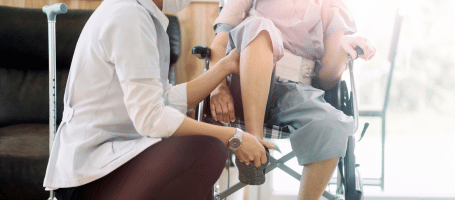
We work hard to secure early admissions of liability. This enables us to obtain substantial interim payments to begin easing the financial hardship which often follows a devastating injury. We use interim payments to make a real difference to the injured person and their family by getting care, rehabilitation and therapies underway as soon as possible. Depending on the client’s injury, we can help meet their needs for:
- personal care and assistance;
- physiotherapy;
- occupational therapy;
- speech and language therapy;
- psychological counselling;
- adapted accommodation;
- wheelchairs;
- transport;
- prostheses;
- assistive technology and other specialist equipment.
By understanding and targeting provision for our clients’ individual needs early in the claims process, we help restore our clients’ mobility, independence and ability to participate fully in family and social life, long before the claim has concluded.
Educational and workplace support
Depending on the type of injury, we can also facilitate our clients’ access to educational and vocational (workplace) support. We work closely with our special educational needs (SEN) specialists to achieve the right school placements for our disabled child clients.