Cervical cancer negligence claims

Our medical negligence solicitors secure life-changing compensation settlements for patients who have suffered significant additional injury and disability as a result of negligent and delayed diagnosis and treatment of cervical cancer.

cervical cancer

Compassionate guidance when a delay changed your treatment.

Cervical cancer can be life-threatening, but recovery is possible with effective screening and timely diagnosis and treatment. Early warning signs of dyskaryosis (pre-cancerous cell abnormalities) from smear tests and follow-up investigations provide an opportunity to heal the patient with simple surgical procedures before the cancer has a chance to develop.

Delays and mistakes in diagnosis and treatment during these vital early stages are extremely stressful for the patient and her family and allow the cancer to progress whilst it remains untreated. More advanced disease means that the patient may need radical treatment with chemoradiotherapy or brachytherapy and suffer painful side effects and additional disability.

If you have suffered severe injury and disability as a result of negligent medical care for cervical cancer, our experienced solicitors can help you obtain the support you need by making a claim for compensation.

  • Nationally recognised medical negligence specialists with decades of experience
  • Access to leading medical experts and rehabilitation professionals
  • Proven track record of securing life-changing compensation for families
  • Dedicated support from initial enquiry through to settlement
  • No upfront costs and claim through a no win no fee agreement

Starting a cervical cancer negligence claim

For more than 30 years, Boyes Turner’s medical negligence solicitors have guided severely injured patients through the claims process to secure the compensation and specialist support that they need to manage their disability and rebuild their lives.

You can contact us for free, confidential advice from a medical negligence solicitor. We will ask you to tell us briefly about your healthcare leading up to your cervical cancer diagnosis and its treatment and advise you about your time limits and whether we can help you investigate your claim. Once our investigations confirm you have grounds for a claim, we will notify the defendant healthcare provider (usually represented by NHS Resolution) on your behalf and invite them to respond, giving them an opportunity to admit liability (responsibility for your injuries) before court proceedings are issued.

If liability is admitted, we will obtain a judgment from the court and apply for a substantial interim payment to meet your needs arising from your injury and disability. If NHS Resolution deny liability, we will advise you about the best way to proceed with your claim. This may involve issuing court proceedings or inviting NHS Resolution to enter into settlement negotiations or mediation.

  • No win, no fee

    No hidden or upfront costs. Clear, straightforward advice. Nothing to pay unless your claim is successful.

  • Over 30 years’ experience

    We have helped thousands of clients claim compensation.

  • Fully regulated

    Authorised and regulated by the Solicitors Regulation Authority.

Cervical cancer compensation claims FAQs

Women (and people with a cervix) with suspected cervical cancer or pre-cancerous changes to the cells on the surface of the cervix (dyskaryosis, cervical dysplasia or cervical intraepithelial neoplasia/CIN), have the right to be referred urgently to a cancer specialist (oncologist) for further investigations, diagnosis and appropriate treatment. This is because most grades of CIN carry a high risk of developing into cervical cancer and early-stage cervical cancer will grow, spread and become life-threatening if left untreated over time.

Treatment with surgery at the pre-cancerous or early cancer stage can be very effective, allowing the woman to return to a healthy quality of life. As the cancer progresses, more radical treatment may involve chemoradiotherapy (chemoradiation), radiotherapy or brachytherapy (internal radiotherapy), which can cause painful and distressing disability from bowel, bladder and sexual dysfunction, loss of fertility and psychological injury. Delays in treatment also increase the risk of the cancer recurring after treatment or spreading to other areas of the body (metastasis).

When a patient’s cancer progresses from a pre-cancerous CIN or early cancer condition to a more advanced cancer during negligent delays in their journey from screening or first symptoms to eventual treatment, a cervical cancer negligence claim can provide compensation for any additional severe injury or disability that was caused by the errors in treatment. In most cases, this means that a woman who should have been treated successfully at an early stage with minor surgery but needed radical treatment owing to healthcare errors or delay can claim compensation for the disability caused by more extensive surgery, chemoradiation, or brachytherapy treatment.

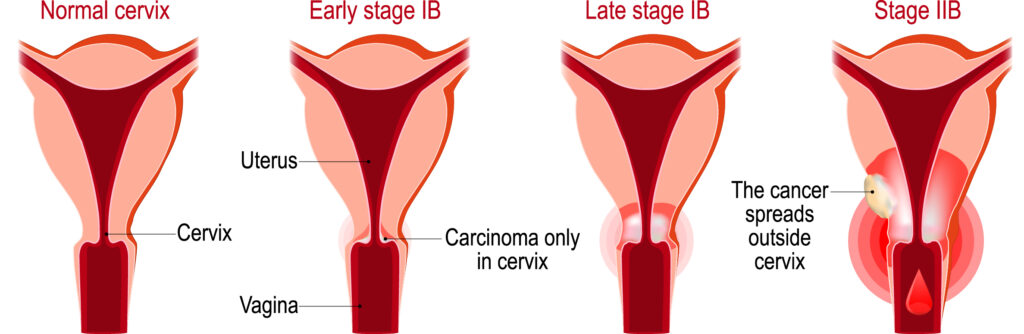
Stages 1A to 1B1 are also known as early-stage cervical cancer. Stages 1B2 to 4A are sometimes known as locally advanced cervical cancer, and stage 4B is known as advanced-stage or metastatic cervical cancer. If the cancer returns after initial treatment, this is known as recurrent cancer.

The choice of treatment for a patient with cervical cancer will depend on the cancer’s grade and stage. Early-stage cervical cancer is often treated surgically, such as by large loop excision, cone biopsy, trachelectomy (removal of the cervix) or hysterectomy (removal of the uterus or womb). Patients with more advanced cervical cancers may need treatment with chemoradiotherapy, radiotherapy and brachytherapy (internal radiotherapy).

CIN is an abbreviation of cervical intraepithelial neoplasia and is also known as cervical dysplasia. CIN is not cancer but should be monitored and treated as a pre-cancerous condition, because CIN refers to abnormal changes in the cells on the surface of the cervix which, if untreated, can develop into squamous cell cervical cancer. The main cause of CIN is human papillomavirus (HPV).

CIN does not cause symptoms, which means that women (or people with a cervix) will not know that they have it unless it is detected during cervical screening. CIN is not diagnosed from a smear test, but if a smear test reveals that the patient has abnormal cells on their cervix, a further test called a colposcopy (an internal examination of the cervix often combined with a biopsy) can lead to a CIN diagnosis.

CIN is graded from 1 to 3 according to how deeply the cervical surface is affected by abnormal cells:

  • CIN1 is the lowest grade. A diagnosis of CIN1 should always be followed up with repeat smear tests or colposcopies but may return to normal without treatment. If treatment is needed to remove or destroy the abnormal cells after a diagnosis of CIN1, it is usually effective.
  • CIN2 is sometimes called high-grade or moderate dysplasia and has a higher risk that the abnormal cells will develop into cervical cancer if untreated. Treatment for CIN2 can involve loop electrosurgical excision procedure (LEEP), or cone biopsy.
  • CIN3 is also known as high-grade or severe dysplasia, however, CIN3 is not cancer. CIN3 must be treated, such as with loop electrosurgical excision procedure (LEEP) or cone biopsy, to remove or destroy the abnormal tissue and prevent cancer from developing in future.

If negligent delays in monitoring, following up or treating CIN result in the patient developing cervical cancer and requiring more invasive treatment, the injured patient may be able to claim compensation.

HPV or human papillomavirus is an infection that can be passed from person to person by any form of skin-to-skin or sexual contact. HPV infection is very common and affects a large proportion of the population, but because it does not cause symptoms, people who are infected with HPV are often unaware that they have it.

There are hundreds of different strains or types of HPV and, for most people, HPV is harmless. Those with strong immune systems can clear their body of HPV infection within one or two years, but others will remain infected by HPV. Some strains of high-risk HPV cause pre-cancerous changes in the cells of the cervix (dyskaryosis) if they remain in the body over time. If undetected or left untreated, dyskaryotic cells can lead to cervical cancer. Almost all (99.7%) incidences of cervical cancer are now known to be caused by high-risk HPV. In fact, it is very rare for people who do not have HPV infection to develop cervical cancer. Where it happens, this could be because the type of cervical cancer is very rare, or because cervical screening has incorrectly failed to detect or follow up signs of HPV infection.

Cervical screening (smear tests) now include primary testing for high-risk HPV. This helps identify people with high-risk HPV, so that they can be monitored for early signs of dyskaryosis. If a smear test reveals that a patient is infected with high-risk HPV, the same sample is then examined in a laboratory (cytology) for any abnormal, pre-cancerous cell changes. If abnormal cells are found, the patient should be contacted and invited to have their cervix carefully examined via a colposcopy procedure to decide whether further treatment is needed. If the patient has HPV but there are no cervical cell changes, they should be recalled and monitored at closer intervals via further cervical screening.

As high-risk HPV infection is now known to cause most cervical cancers, HPV vaccination is now being used, very successfully, to reduce the number of women who develop HPV-related cervical cancers.

Cervical cancer medical negligence claims often involve one or more of the following mistakes in the patient’s care:

  • delayed recognition of red flag, signs and symptoms of cervical cancer;
  • delay or failure to refer the patient for investigations or specialist care;
  • failures, delays, or errors (misdiagnosis) in the diagnosis of cancer;
  • failure to request, carry out, chase up or follow-up tests or investigations;
  • misinterpretation or incorrect reporting of test results (smears, scans, biopsies, blood tests);
  • delayed surgery or other treatment;
  • use of incorrect treatment, dose, or technique;
  • communication and follow-up errors (failing to follow up or recall a patient after abnormal screening or test results).

Cervical cancer claims aim to compensate the injured woman for the additional, avoidable injury and long-term disability that she suffers as a result of negligent mistakes and delays in her medical care. In most cases arising from delays in referral, investigation, diagnosis or treatment of cervical cancer, the injury and disability will be associated with the need for more invasive treatment, such as chemoradiation, radiotherapy, or brachytherapy.

Injuries which commonly lead to cervical cancer compensation claims include:

  • impaired bowel function or incontinence;
  • impaired bladder/urinary function or incontinence;
  • sexual dysfunction and/or loss of fertility;
  • chronic severe pain;
  • PTSD and psychological injury;
  • metastasis (the spread of cancer to other parts of the body);
  • complications from radiotherapy or chemotherapy (neutropenic sepsis):
  • burns, scarring or extravasation injury;
  • recurrence of cancer or increased future risk of recurrence;
  • fatal injury.

Cervical cancer claims usually involve compensation for one or more of the following injuries, needs and financial losses that were caused by the negligent healthcare:

  • additional pain, suffering and disability;
  • medical treatment and therapies;
  • costs of fertility treatment, such as IVF;
  • home adaptations or specialist equipment, e.g. to improve bathroom accessibility;
  • costs of care and household assistance;
  • psychological counselling;
  • financial losses, such as loss of earnings.

Where the negligent care resulted in the patient’s death, their bereaved, dependent family also may be able to claim compensation for funeral expenses, a statutory bereavement payment and the loss of their income or ‘services’, such as childcare, housework, gardening or DIY.

Cervical cancer claims and the medical experts’ reports that we use to support them often contain professional terminology (jargon) which can be hard to understand.

Our solicitors will try to avoid using complex medical terminology when discussing your claim with you or will provide a clear explanation where it is necessary to use a specific term.

We have also put together a list of some of the medical terms that are commonly used in cervical cancer claims, with a brief explanation of their meaning and context.

A

Adenocarcinoma – A type of cervical cancer that develops from glandular cells in the cervix.

Adenosquamous carcinoma – A rare type of cervical cancer that features both squamous cells and glandular cells.

B

Biopsy – A procedure in which a small sample of cervical tissue is removed and examined under a microscope for cancer or pre-cancerous changes.

Brachytherapy – A type of internal radiation therapy where a radioactive source is placed inside or near the tumour.

C

Carcinoma in situ (CIS) – Abnormal cells which appear cancerous under a microscope but have not yet spread beyond the surface of the cervix. CIS is also known as Stage 0 cancer.

Cervical Intraepithelial Neoplasia (CIN) – A term for pre-cancerous changes in the cervix, graded as CIN 1 (mild), CIN 2 (moderate), or CIN 3 (severe, high risk for cancer).

Cervical Screening – A screening test that checks for abnormal cervical cells that may indicate cancer or pre-cancerous changes. Cervical screening (or smear test) may also involve primary testing for HPV.

Chemotherapy – A treatment that uses medicines to kill cancer cells.

Chemoradiotherapy (also known as Chemoradiation) – A combination of both chemotherapy and radiotherapy used to treat more advanced cervical cancer.

Colposcopy – A procedure in which a magnifying instrument (colposcope) is used to examine the cervix for abnormalities. Colposcopy procedures sometimes also include taking a biopsy.

Cytology – Laboratory examination of cell structure under a microscope.

D

Dysplasia – Abnormal cell growth that may develop into cervical cancer if left untreated.

Dyskaryosis – Abnormal cells indicating pre-cancerous change.

E

Endocervical Curettage (ECC) – A procedure in which cells from the inner part of the cervix (endocervical canal) are scraped and examined.

Epithelium – The thin layer of cells covering the cervix (where most cervical cancers begin).

Excisional Procedure – A method of removing abnormal cervical tissue, such as LLETZ or cone biopsy.

H

Histopathology – Microscopic examination of changes in cells and tissues to diagnose and study disease.

HPV (Human Papillomavirus) – A common, symptomless infection, passed from person to person by sexual contact, that is the primary cause of cervical cancer.

HPV Test – A screening test that detects high-risk HPV strains linked to cervical cancer.

HPV Vaccine – A preventive vaccine that protects against HPV infection and reduces the risk of cervical cancer.

Hysterectomy – Surgical removal of the uterus (womb). Hysterectomy, with removal of the cervix, is sometimes used to treat cervical cancer.

I

Invasive Cervical Cancer – Cancer that has spread beyond the cervix.

L

LLETZ (also known as LEEP – Loop Electrosurgical Excision Procedure) – A treatment that removes abnormal cervical tissue using a thin, electrically charged wire loop.

M

Metastasis – The spread of cervical cancer cells from the cervix to other parts of the body.

P

Pre-cancerous Lesion – Abnormal cervical cells that are not yet cancerous but may develop into cancer if untreated.

R

Radical Hysterectomy – A surgical procedure that removes the uterus, cervix, parts of the vagina and surrounding tissues.

Radiotherapy – A treatment that uses high-energy radiation to destroy cancer cells.

S

Small Cell Carcinoma – A very rare type of cervical cancer that develops in hormone-producing cells.

Smear Test – A cervical screening test that checks for abnormal cervical cells that may indicate cancer or pre-cancerous changes. Cervical screening may also involve primary testing for HPV.

Squamous Cell Carcinoma – The most common type of cervical cancer, arising from squamous cells in the cervix.

Staging – The process of determining the extent of cancer spread, from Stage 0 (pre-cancerous) to Stage IV (advanced cancer).

T

Trachelectomy – A surgical procedure to remove the cervix.

Tumour – An abnormal mass of tissue that can be benign (non-cancerous) or malignant (cancerous).

Total hysterectomy – The removal of both the uterus and cervix, used to treat cervical cancer.

Making a cervical cancer claim

We understand how daunting it can feel to take the first step. Our specialist medical negligence solicitors are here to guide you through every stage.

Getting in touch

Call us or complete our online enquiry form for free, confidential advice from a specialist cervical cancer negligence solicitor. We will listen to your concerns, explain your options, and advise whether we can investigate if delays or failures in screening, diagnosis or treatment caused avoidable harm.


Supporting your claim

Our solicitors will review your medical records, instruct independent experts, and investigate whether cervical cancer was identified and treated appropriately. Where negligence is identified, we can build a strong claim and, where appropriate, seek an interim payment to help meet immediate treatment and support needs.

Securing compensation

We provide compassionate support throughout the claims process, working to secure the maximum compensation as quickly as possible to help fund treatment, rehabilitation, care, loss of earnings, adapted accommodation where needed, and other essential support.

Contact us

If you would like advice regarding a serious injury or illness affecting you or a loved one, please complete the form and one of our experts will be in touch as soon as possible.

Rather give us a call:

josies cancer story

Client story

Josie's story

A delayed cervical cancer diagnosis meant Josie underwent unnecessary treatment. We secured compensation to support her recovery, including lost earnings and essential aids.

Watch the video3min 9secs

Our cervical cancer claims

Our medical negligence team

Why choose Boyes Turner?

Watch the video1min 25secs

Our clients receive the highest standards of advice and representation and are always treated with compassion, outstanding care and understanding of the physical, emotional, psychological and financial impact that life-changing injury can have upon their lives.

  • We are nationally acclaimed for our claimant medical negligence expertise and the outstanding results we achieve for our clients.
  • We are ranked as leading clinical negligence experts in the Chambers Directory and Legal 500 guides to the legal profession and are accredited for our specialist expertise by the Law Society, AvMA, and the Association of Personal Injury Lawyers (APIL).
  • Our integrated multidisciplinary team offers our clients a full range of specialist help with compensation, rehabilitation, SEN, deputyship, personal injury trusts and community care.
  • We secure maximum compensation in claims for adults and children who have suffered catastrophic injury and severe disability, and provide practical support for their families.

Related cervical cancer insights

Related cervical cancer claims

Leading medical negligence solicitors for over 30 years

Our solicitors’ expertise in medical negligence claims and their dedication to improving the lives of their injured clients has been recognised by the legal profession and disability charities for over 30 years.

Get help today

  • Free & no obligation initial advice
  • Speak directly to a solicitor
  • No upfront costs & no win no fee