Fetal monitoring mistakes in birth injury claims
When errors in fetal monitoring lead to avoidable birth injuries, our specialist solicitors can help families seek compensation and access the support they need.

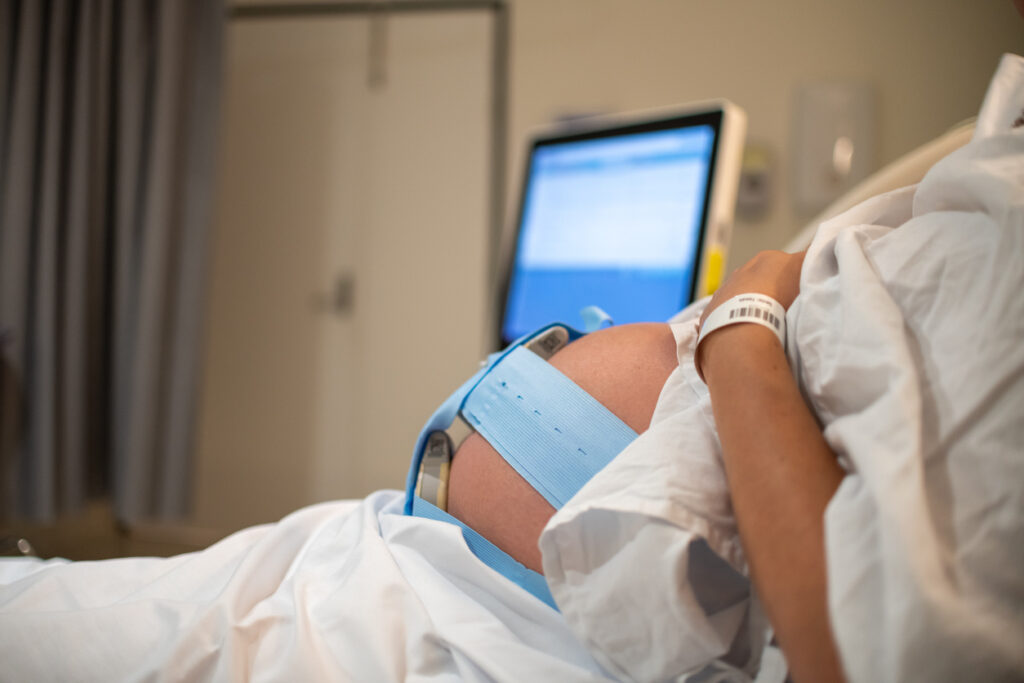
When families ask us to advise whether their child’s birth injury was caused by negligent maternity care, we check whether fetal monitoring mistakes delayed the birth, prolonging the stress on the fetus (unborn baby) during labour, resulting in injury to the baby.
Midwives monitor the fetal heart rate during pregnancy and labour. This helps reassure them of the baby’s wellbeing. Fetal heart monitoring also enables them to identify when a baby is not getting enough oxygen and requires urgent delivery to avoid brain injury from hypoxic ischaemic encephalopathy (HIE).
If your baby was born with HIE brain injury or needed neonatal intensive care after a delayed, prolonged or difficult birth, your fetal monitoring records and CTG traces can provide our specialist birth injury lawyers and medical experts with a contemporaneous account of the events which took place during the labour.
Our birth injury solicitors have helped countless families of children with birth injury disability claim the compensation and support that they need for their child. We are known for our outstanding expertise and success in complex cerebral palsy and birth injury claims, including those involving fetal monitoring misinterpretation and delayed delivery of babies who are suffering from fetal distress. If you would like to find out more about your baby’s birth injury, and what that means for your baby and family, or you have been contacted by MNSI or NHS Resolution, contact us to talk, free and confidentially, to one of our birth injury solicitors.
Fetal monitoring mistakes FAQ
What is fetal monitoring?
Fetal monitoring is one of the ways that midwives check on the unborn baby’s health and wellbeing during pregnancy and labour.
Midwives use fetal heart monitoring to record and track the baby’s heart rate and response to maternal contractions. They assess the baby’s condition by checking the rate and variability of the baby’s heart rate and the presence of (potentially harmful) decelerations or (reassuring) accelerations. A short period of fetal monitoring usually takes place when the mother attends maternity triage or is admitted to hospital in labour, and then again at regular intervals or continuously depending on the midwife’s assessment of the mother’s risk status and the baby’s condition.
The midwife or obstetrician (childbirth doctor) interprets the fetal heart rate monitoring results and categorises them as ‘normal’, ‘suspicious’ or ‘pathological’. This interpretation and categorisation is important because it helps determine whether the labour should be allowed to continue, or whether intervention is required to augment (boost) the mother’s uterine contractions with Syntocinon or to deliver the baby urgently using ventouse suction, forceps or caesarean section.
Fetal monitoring is an important process in the provision of safe maternity care and should be carried out in accordance with national guidelines. Midwives and obstetricians are expected to be fully trained in the use and interpretation of fetal monitoring, and should know how to escalate and respond to signs of fetal distress. Fetal heart monitoring, including apparently normal results, should always be considered in conjunction with an overall clinical assessment of the mother’s health and risk factors, as well as the history of the current and previous pregnancies and any other maternal concerns, such as unusually severe pain, unexpected vaginal bleeding or reduced fetal movements.
How is fetal heart monitoring performed during pregnancy and labour?
There are several standard methods that are used to monitor the baby’s heart rate during pregnancy and labour. The type of monitoring that is used depends on various factors, including the mode of birth (vaginal delivery, VBAC, caesarean section) or the place of birth (hospital maternity department, midwifery-led setting), the mother’s risk status and informed preferences. The method and duration of fetal monitoring should be reviewed and adapted as necessary to provide safe care if complications or concerns arise during labour.
Intermittent auscultation (IA)
During intermittent auscultation (IA) a midwife listens to the baby’s heartbeat, usually during and after contractions, through a hand-held Pinard stethoscope (ear trumpet) or a doppler ultrasound (Sonicaid) device which is held against the mother’s abdomen. The midwife must listen, count and record the number of fetal heartbeats heard over one minute, whilst simultaneously feeling the pregnant mother’s pulse (which should be different) to ensure that the mother’s heartbeat is not mistaken for the baby’s. Both types of IA rely on the midwife using the correct technique to pick up or hear, count and note the baby’s heartbeat accurately. IA is usually used in midwife-led maternity care where a mother’s labour is progressing well and the pregnancy is low risk with no reported or anticipated complications.
Electronic fetal monitoring by cardiotocography (CTG)
During CTG monitoring, round transducer sensors are strapped to the mother’s abdomen via an elastic belt. These are connected to a monitor that shows the fetal heartbeat and the mother’s contractions. The CTG monitor produces an audible pulsing sound and a continuous graph or CTG trace of the fetal heart rate in response to maternal contractions. The CTG monitor can also be set to show the baby’s movements, which are recorded by the mother pressing a button each time she feels her baby move.
CTG monitoring produces a clearer, more objective, continuous picture of the fetal heart rate, making it easier to track changes in baseline variability, accelerations and decelerations over time. National guidelines recommend that continuous electronic (CTG) fetal monitoring is used during labour where the mother has risk factors or there are complications or concerns, and when closer monitoring is required for the safety of mother and baby.
Fetal scalp electrode (FSE)
A fetal scalp electrode (FSE) is an internal method of fetal heart monitoring which involves attaching a small electrode to the baby’s scalp during a vaginal examination. The FSE is connected to a monitor and once attached to the baby’s scalp, it picks up the baby’s heartbeat and provides a print-out of the fetal heart rate.
Internal monitoring with FSE is more invasive than CTG monitoring or IA but can be vitally important if external monitoring via CTG is thought to be unreliable owing to loss of signal, or where the CTG indicates a problem with the baby’s heart rate. FSE monitoring is often used by maternity teams in deciding whether labour is safe to continue or whether the baby needs to be delivered urgently by forceps, ventouse suction or caesarean section.
What types of fetal monitoring mistakes lead to birth injury?
Birth injury claims commonly involve delays arising from one or more of the following fetal monitoring mistakes:
- failing to start or continue fetal monitoring;
- poor technique or incorrect use of IA or CTG monitoring;
- mistaking the maternal pulse for the baby’s heart rate;
- misinterpreting or incorrectly categorising a ‘suspicious’ or ‘pathological’ CTG trace as ‘normal’;
- failing to recognise or act on signs of fetal distress (abnormal heart rate or baseline variability, decelerations);
- failing to escalate fetal heart rate abnormalities or call for senior or medical review;
- delay or failure to expedite delivery after a ‘pathological’ CTG trace;
- failing to monitor in accordance with national guidelines for IA, CTG and FSE;
- failing to transfer a mother from a midwifery-led setting to an obstetric-led unit after abnormal IA findings;
- system failures (e.g. failing to ensure midwives are skilled in IA, CTG interpretation).
Fetal monitoring is standard, recommended practise during pregnancy and labour as a way of checking and assessing the health of the unborn baby. External and internal methods of fetal heart monitoring are used routinely in hospitals and other maternity settings to assist midwives and obstetricians in making potentially life-saving decisions about labour and delivery of the baby.
Mistakes in the use, timing, technique and interpretation of fetal monitoring impair the maternity team’s ability to make safe clinical decisions based on an accurate assessment of the health of the unborn baby. This can result in critical delays in delivering babies with fetal distress, causing (or worsening) injury to their brain and lifelong neurodevelopmental disability.
Numerous reports by national organisations, such as the former HSIB, MNSI, RCOG and NHS Resolution, have repeatedly confirmed our own experience that negligent fetal monitoring is a leading contributory factor in birth injury to babies and their mothers, and in medical negligence birth injury claims.
How do maternal and fetal heart monitoring mix-ups occur?
We have handled many claims for injured babies whose birth was delayed when their midwives or doctors were falsely reassured about the baby’s health because they did not recognise that they were monitoring the mother’s heartbeat instead of the baby’s.
Maternal and fetal monitoring mix-ups commonly feature in cases where an unborn baby has become so unwell from oxygen deprivation during the labour that their heartbeat is too weak for the CTG transducer to pick up. During fetal monitoring in labour, the CTG uses low power ultrasound doppler signal to detect the baby’s heartbeat, isolating it from the other movements within the mother’s abdomen, but if the transducer can’t detect a signal from the fetal heart, it will respond instead to the signal produced by the mother’s abdominal and uterine blood vessels and reproduce the mother’s heart rate on the CTG trace instead of the baby’s. The mother’s heart rate would normally be slower than the baby’s but the stress of contractions during labour and delivery cause her heart rate to rise. Her tachycardia may then be misinterpreted as a reassuringly normal fetal heart rate by the midwife.
Monitoring mix-ups between the maternal and fetal heart rate can also be the result of incorrect placement of the CTG transducer on the mother’s abdomen or a midwife or doctor’s lack of skill and experience in CTG interpretation resulting in failure to recognise the inconsistency of the unwell baby’s sudden improvement and apparently normal heart rate.
Fetal monitoring mix-ups can also occur during intermittent auscultation (IA) where a midwife doesn’t realise that they are listening to the mother’s heartbeat instead of the baby’s because they have failed to feel simultaneously for the maternal pulse whilst listening for the fetal heartbeat.
Birth injury claims involving negligent fetal monitoring
Boyes Turner’s birth injury lawyers have secured life-changing compensation for countless children with brain injury disability, such as cerebral palsy, whose injury was caused by negligent maternity care involving fetal monitoring errors.
Recent settlements include:
- £31.5 million settlement for a teenager with cerebral palsy from an HIE birth injury caused by midwife mistakes including negligent IA monitoring;
- £21 million settlement for a teenager in a cerebral palsy birth injury claim involving fetal monitoring mistakes and misinterpretation;
- £16 million settlement for a teenager in an HIE birth injury claim involving negligent failure to follow fetal monitoring guidelines;
- a multi-million dollar settlement in an HIE birth injury claim arising from inadequate fetal heart monitoring the second stage of labour;
- Successful liability settlement due to skilled analysis and reconstruction of 20-year-old CTG traces in a HIE birth injury claim.
Contact us
If you would like advice regarding a serious injury or illness affecting you or a loved one, please complete the form and one of our experts will be in touch as soon as possible.
Rather give us a call:
Our birth injury claims

Podcast
Video
CNZ -v- Royal United Hospitals Bath NHS Foundation Trust: $45million settlement for claimant

Podcast
Video
£18.7 million* settlement for teenager with cerebral palsy caused by negligently delayed delivery

Podcast
Video
£11.8 million settlement in birth injury claim for child with cerebral palsy

Podcast
Video
£18.1m settlement for child with severe cerebral palsy, visual and learning disability from maternity negligence

Podcast
Video
£4 million compensation settlement in birth injury claim for an 11-year-old boy with cerebral palsy

Podcast
Video
£12 million settlement for child whose severe dyskinetic cerebral palsy was caused by negligent water birth

Podcast
Video
£13m+ settlement after negligent treatment of neonatal necrotising enterocolitis and hypocarbia cause cerebral palsy

Podcast
Video
£18.4 million settlement after delayed treatment of HSV infection in forceps scalp grazes causes cerebral palsy

Podcast
Video
£7.4m settlement for child with severe cerebral palsy after hospital sent her mother home in labour

Podcast
Video
£14.6 million settlement for young man with cerebral palsy from uterine hyperstimulation at time of birth
Our medical negligence team












Related birth injury insights

Podcast
Video
What are interim payments?

Podcast
Video
Erb’s palsy disability support from compensation

Podcast
Video
Five common reasons why babies are admitted to SCBU, NNU or NICU

Podcast
Video
Blindness and visual impairment in neurological injury claims

Podcast
Video
Can delayed C sections cause birth injury?

Podcast
Video
Court approval hearings after settlements in injury claims for children

Podcast
Video
Neonatal brain injury from hypoglycaemia can my child claim compensation?

Podcast
Video
Perineal tears and OASI injuries in childbirth can I claim compensation?

Podcast
Video
What happens after liability judgment in a medical negligence claim?

Podcast
Video
Can a birth injury claim provide a better family home for a child with cerebral palsy?
Related birth injury claims
Autism and ADHD
Birth injury
Cerebral palsy
Hypoxic brain injury claims for babies (HIE)
Meconium aspiration syndrome (MAS)
Neonatal brain injury claims
Neonatal hypoglycaemia brain injury claims
Twin pregnancy birth injury claims
Leading birth injury solicitors for over 30 years






Stay informed with insights from Boyes Turner
Sign up to receive the latest legal updates, expert commentary, and practical guidance tailored to your interests.