Get in touch
If you have any questions relating to this article or have any commercial matters you would like to discuss, please contact us.
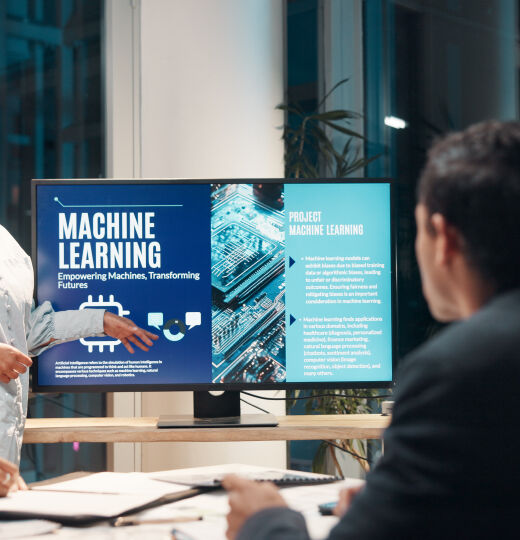

For most businesses, deployment of AI is now a question of “how” (and which tools and use cases), not “if”. Among legal professionals, concerns over data integrity, accuracy and the resultant need for human oversight of AI tools are increasingly understood and acknowledged. Less well-rehearsed, however, are questions regarding what effective AI deployment means for skills retention and development.
If an AI tool assumes the role of a junior colleague “who never sleeps” (but still needs supervision), what does that mean for colleagues early in their careers? Will they be expected to progress faster? How do we all stay sharp and add value if a ghost in the machine relieves us of a significant part of our workload?
AI commonly drives efficiency by removing the ‘churn work’ of repetitive and high-volume tasks. This is expected to support employee retention by reducing the less satisfying aspects of routine work and allowing more time to focus on higher-value activities. But if that repetition has historically been a key training ground to build the foundational skills of one’s trade or craft, what does that mean for skills development? How do we avoid a skills gap – or worse, a brain drain – where outsourcing to AI actually hampers skills and cognition?
The World Economic Forum's Future of Jobs Report 2025, bringing together views of over 1000 global businesses, provides valuable context. It predicts that AI will create 78 million new jobs (net), but this depends on a major skills shift; nearly 40% of skills sets are expected to change and 59% of workers will need upskilling or reskilling in the next five years. Aside from an increased need for the obvious technological capabilities in AI and big data, and cybersecurity, the skills notably predicted to be most in demand by 2030 include human-centric skills of analytical thinking, creative thinking, resilience, and social skills.
Meaningful investment in upskilling and reskilling programs – that go beyond merely training on tool functionality – will be critical to empowering workforces and driving efficiency and a competitive edge. Businesses therefore need to embrace AI strategically through proper process, governance, and monitoring and, at employee level, ensure messaging emphasises the risks of over-reliance and that (human) intellect cannot be outsourced.
Essential user skills include:
A recent study by Microsoft and Carnegie Mellon University indicates that AI usage correlates with reduced critical thinking when users blindly trust outputs. Carl Carter, Director at Adaptiv AI recommends preventing this brain drain by “beginning each task with human-led thinking: define the problem, establish evaluation criteria, and map your approach. Then deploy AI for execution: the drafting, formatting, and content synthesis that consumes time but not insight. Finally, reassert human judgment by critically reviewing outputs [...]. By bookending AI automation with human cognition, we capture efficiency without sacrificing the mental exercise that keeps our thinking sharp.”
An open culture of continuous learning around AI will support responsible engagement and discerning use. Ben Martin, Legal Engineer at Wordsmith AI recommends:
Over time, wider training programmes will increasingly need to support creative and strategic thinking, complex analysis and social skills that build business relationships. The focus will shift from ‘how to do the work’ to how to think better, particularly as those earlier in their careers are freed of traditional churn work.
Businesses’ monitoring processes should assess not only how AI deployment affects business performance but also how it impacts skill development, job satisfaction, and career progression in the workforce. Leaders should be ready to adjust their organisation’s AI-strategy and training based on real-world results.
AI deployment is more than a technology decision - it's a workforce strategy. Successful roll-out and integration require that efficiency gains are balanced with meaningful skill development and progression pathways, while maintaining or elevating the human elements that make your services valuable. In some ways, these challenges are not new. In the legal arena, before AI, we had automation and, before that, precedents. Every new tool requires users to understand how to use it, recognise its limitations, and know where to apply critical or creative thinking. Striking the right balances transforms AI into a tool for building better teams, not replacing them.
For previous tips on AI risks and governance, please see our earlier articles on Generative AI: The legal risks for businesses worldwide and protecting your commercial data and IP when using AI.
If you need advice on assessing AI for deployment for your business, please get in touch with our Commercial and Technology lawyers at [email protected].
Share:
If you have any questions relating to this article or have any commercial matters you would like to discuss, please contact us.

Sign up to receive the latest news on areas of interest to you.
Sign up to our newsletter