Get in touch
If you have any questions relating to this article or have any legal matters you would like to discuss, please contact the Dispute Resolution team.
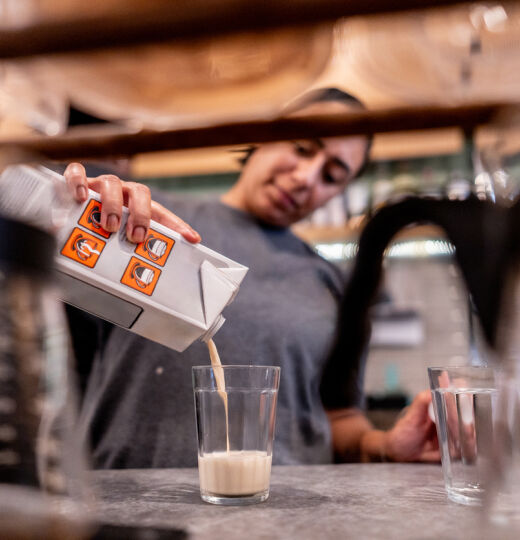
At the end of last year, the UK Court of Appeal gave a judgment preventing Oatly from using the word ‘milk’ in relation to oat-based products (see Dairy UK Ltd v Oatly Ab [2024] EWCA Civ 1453). Since then, Oalty has been granted permission by the Supreme Court to make a further appeal. Undoubtedly, the Supreme Court’s final decision on the matter will be highly anticipated and is sure to have significant ramifications across the dairy-alternative industry.
Dairy UK Ltd, the trade association for the UK dairy industry, first made an application in 2021 to invalidate Oatly’s registered trade mark of “POST MILK GENERATION.” The Intellectual Property Office (IPO) initially invalidated the trade mark, but following Oatly’s appeal, the High Court decided in 2023 that the use of the word ‘milk’ in Oatly’s mark was permissible since it was used to indicate a “unique trade source” for its goods rather than to describe the goods themselves. Upon Dairy UK’s further appeal, the Court of Appeal have now disagreed with the High Court’s assessment and re-instated the IPO’s original decision on the basis that trade marks are within the definition of a ‘designation’ and that ‘milk’ is a designation set out in EU Regulation No. 1308/2013 (assimilated into UK law under Brexit) that can only be used in marketing specific dairy goods. It is yet to be seen how the Supreme Court will further deal with the case.
Part of Oatly’s argument for the validity of its trade mark was that the definition of ‘designation’ under the Regulation should be interpreted narrowly as meaning a “generic description” of a product and thus should exclude trade marks from its scope. Dairy UK submitted alternatively that ‘designation’ should be interpreted widely as a term that refers to a product in any way. After considering the parties’ submissions, existing case law, and the context of the legislation, the Court of Appeal felt that trade marks were within the definition of ‘designation’. Being mindful that the purpose of the Regulation is to protect consumers, the Court said it would not make sense for trade marks to be used to circumvent the rules.
Having determined that the “POST MILK GENERATION” trade mark did in fact fall within the rules of the Regulation – since it was a designation – the Court of Appeal determined that ‘milk’ could not be used in reference to an oat-based product. Although Oatly tried to rely on the wording in the Regulation that allows ‘milk’ to be used for products where the designation is being used to describe a “characteristic quality” of the product, the Court of Appeal felt that this trade mark was being used to describe the consumers of the product rather than a quality of the product itself.
The Court of Appeal’s decision so far follows in the footsteps of precedent cases such as the 2017 EU case of VSW v TofuTown in which the Court did not allow designations like ‘butter’ and ‘cheese’ to be used in marketing for soya-based products, despite additional language communicating that the products were plant-based. It will therefore be interesting to see whether the Supreme Court finds differently on these facts.
This case serves as a reminder of the strict nature of designations, as well as the risks of failing to take this into account when creating a trade mark. The Regulation does, in fact, extend beyond limiting the use of the word ‘milk’ and also lists words such as veal and wine as designations which may only be used in marketing for prescribed products. The Court of Appeal made it clear in its judgment that the lack of an “intention to deceive” did not excuse the use of the term ‘milk’ in marketing for an oat-based product, so business should always be mindful when coming up with marks and slogans. It will be interesting to see how the case and the law continues to develop.
If you have any questions about trade mark protection or other intellectual property rights, please contact our Commercial and Technology team or our Dispute Resolution team.
Share:
If you have any questions relating to this article or have any legal matters you would like to discuss, please contact the Dispute Resolution team.
Consistent with our policy when giving comment and advice on a non-specific basis, we cannot assume legal responsibility for the accuracy of any particular statement. In the case of specific problems, we recommend that professional advice be sought.

Sign up to receive the latest news on areas of interest to you. We can tailor the information we send to you.
Sign up to our newsletter